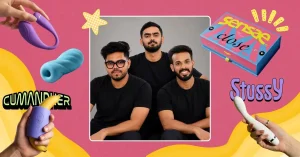
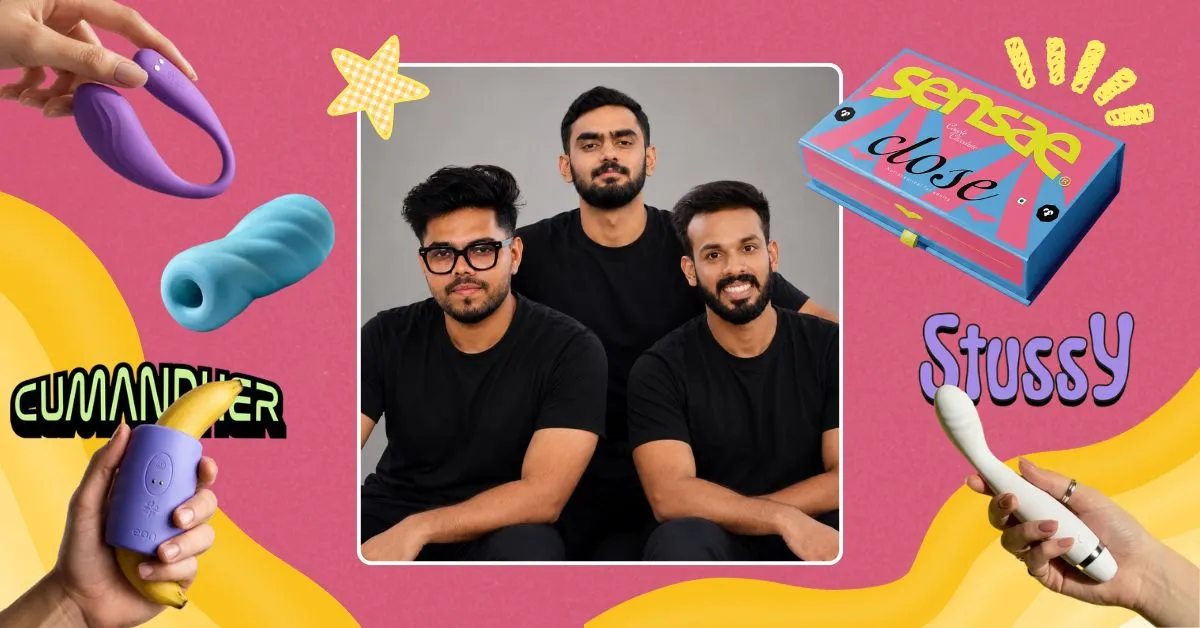
There was a time when buying a sanitary napkin was almost like a secret mission. Advertisements for menstrual products were equally cautious, too, with brands often resorting to ‘whispers’ rather than saying the word ‘period’ out loud. If that is how far we have come with a subject as fundamental as menstruation, imagine a time when conversations around sexual health, self-pleasure and intimacy become just as commonplace. A time when buying a vibrator or a massager does not invite hushed conversations or the need for elaborate explanations. We may not be there yet, fully, but some brands are attempting to bring that conversation closer, and as a society, the change is visible. One among them is Sensae, a homegrown sexual wellness brand founded by the trio Arundas, Ashfak and Farseen from Malappuram.
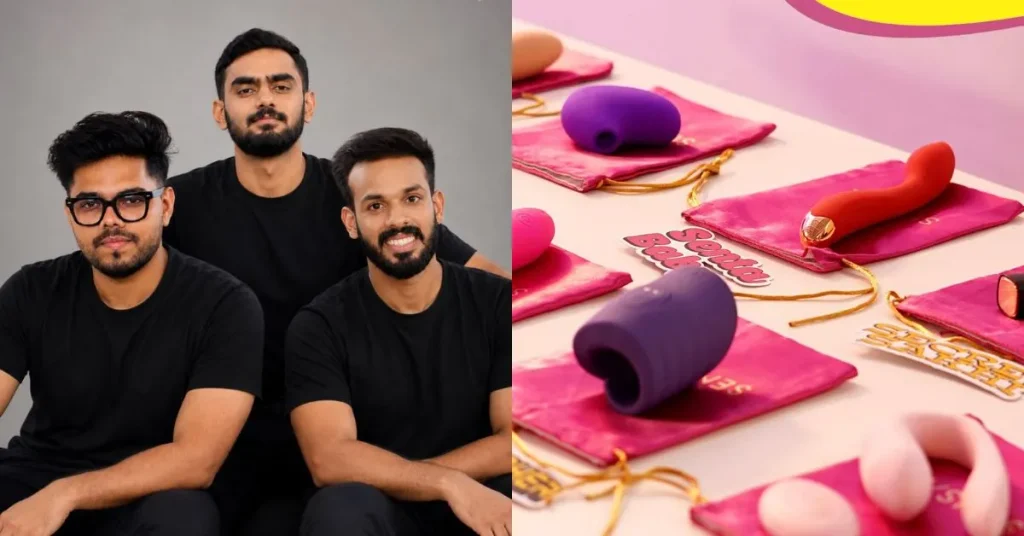
When asked where it all began, Arun, one of Sensae’s founders, shares everything from the ambitious idea that went beyond selling products to making people comfortable with the idea of pleasure itself.
Ashfak and Farseen were in London at the time. They noticed an intimacy store across the road from where they stayed. Customers walked in, explored the products and made purchases without treating the experience as something unusual or with zero awkwardness. The contrast really stayed with them and eventually led to a question: “Could a similar approach work in India, where sexual wellness products often come with a layer of social hesitation?” They shared the idea with their business partner Arun, who was in Delhi. The three eventually decided to explore the market together. And that’s how Sensae came to be.
Their first offering was intimacy chocolates. “We started with intimacy chocolates. Intimacy chocolate is literally a sex chocolate. It was first introduced in the US by TABS Chocolates. We decided to sell it in India, and so we designed it with a manufacturer in Delhi. We sold it for around nine months to understand the market, and the response was good,” Arun says.
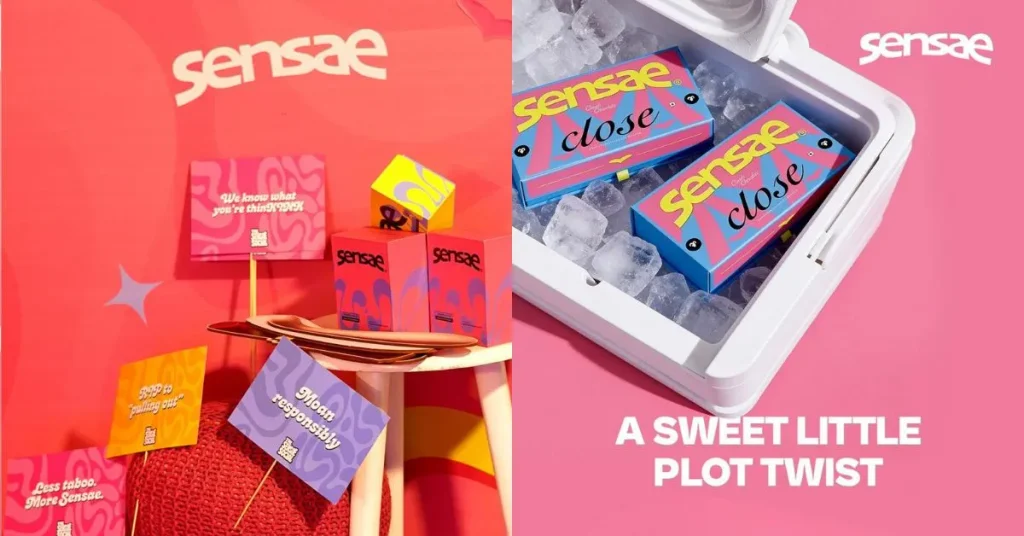
The product was initially introduced as a way to understand consumer interest and test the market. The response encouraged them to venture into the massager category, which they introduced more recently. “Usually, products such as Viagra and other performance-oriented products are associated with men. We wanted to explore something that women could also enjoy. We thought it should be a gender-neutral product, he says, adding, “It is not a medical product. We do not claim that it will boost your mood or guarantee any particular outcome. We only say that certain ingredients may help.”
The founders say the initial experience helped them understand that there was an audience willing to explore pleasure products, even if the conversation around them was not always visible.
What makes them unique?
In a market that already has several sexual wellness brands, Sensae wants to distinguish itself through an approach that combines products with education and community-building. “We did not start this brand from a commercial perspective. We also want to prioritise awareness, break taboos and normalise conversations around sexual health. That is why we are building a parallel platform called Sensae Social,” says Arun.
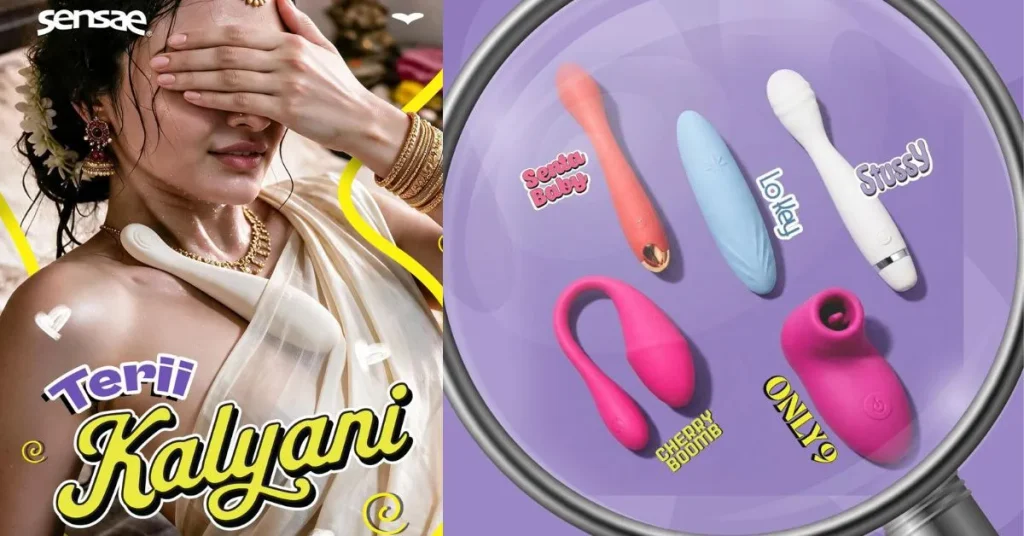
Another conscious choice is evident in the design and naming of its products. Rather than opting for anatomically explicit shapes, the brand keeps the designs discreet and approachable. Its products also carry friendly, familiar names such as Kalyani and Luna, giving them a more everyday identity rather than making them seem intimidating or overtly suggestive.
The platform has already hosted its first gathering in Kochi, bringing together gynaecologists, psychologists, intimacy curators and members of the public. Rather than restricting the discussion to sexual health, the event explored different aspects of intimacy and relationships, encouraging participants to ask questions and share perspectives. The response was more than what the team anticipated. “We could accommodate only 50 people even though we received over 200 enquiries. Now, we hope to conduct an event in different cities every three months,” the co-founder says.
The brand also has an experience centre in Kochi where customers can interact with the team, understand the products and ask questions about their use. The intention is to make purchasing a pleasure product feel as ordinary as buying any other wellness product. For the founders, this is an important part of the experience. “A first-time buyer may have questions about the product, its material, functionality or suitability. Having someone available to address these concerns can make the process less intimidating,” Arun points out.
Why should men have all the fun?
Another aspect of the brand’s approach is putting women at the centre of pleasure – its emphasis on women’s participation, both as consumers and as contributors to the conversation. Arun notes that while men account for a larger share of buyers in Kerala, around 80 per cent of the products sold are intended for women. The product portfolio includes offerings for women, men and couples, although the women’s category remains the largest.
As an intimacy brand founded by an all-male team, the founders are often asked whether the absence of women among them influences how they approach the category. Arun believes that men taking the initiative to build a sexual wellness brand is, in itself, a way of challenging the taboo surrounding the subject. At the same time, the team has consciously built a strong female presence, particularly in content creation and ideation. “Most of our staff are women. Our creators are women, too. Around 80 per cent of our ideas and content come from the women on our team. We try to do what we may not be able to think of ourselves. Our team helps us understand those gaps,” Arun says.
This emphasis on women’s pleasure was also part of the thinking behind their first product. Intimacy chocolate was conceived as a gender-neutral offering in a category where pleasure-enhancing products have traditionally been marketed largely towards men. “Usually, when you talk about products for pleasure, the focus is on men. We thought, why should boys have all the fun?” the cofounder recalls, adding, “Many of the taboos surrounding these products are breaking. When people (who are doing long-distance, especially) order these products for their wives, that itself is a big change.”
The 3 Ys of the brand: Quality, Technology, Privacy
Product quality is another area the founders highlight as a differentiator. The brand uses medical-grade silicone for its products, compared to lower-quality alternatives in the market, as a concern.
Some of its devices also come with features that allow partners to control each other’s massagers remotely. “We have app-based features, including long-distance control. When partners are in different locations, one person can control the other’s device through an app. We have integrated these features to offer a better experience,” Arun says. The feature is particularly aimed at couples in long-distance relationships, offering another way to maintain intimacy despite physical distance.
However, technology and product specifications are only part of the equation. Privacy remains a significant consideration, especially for people purchasing such products for the first time.
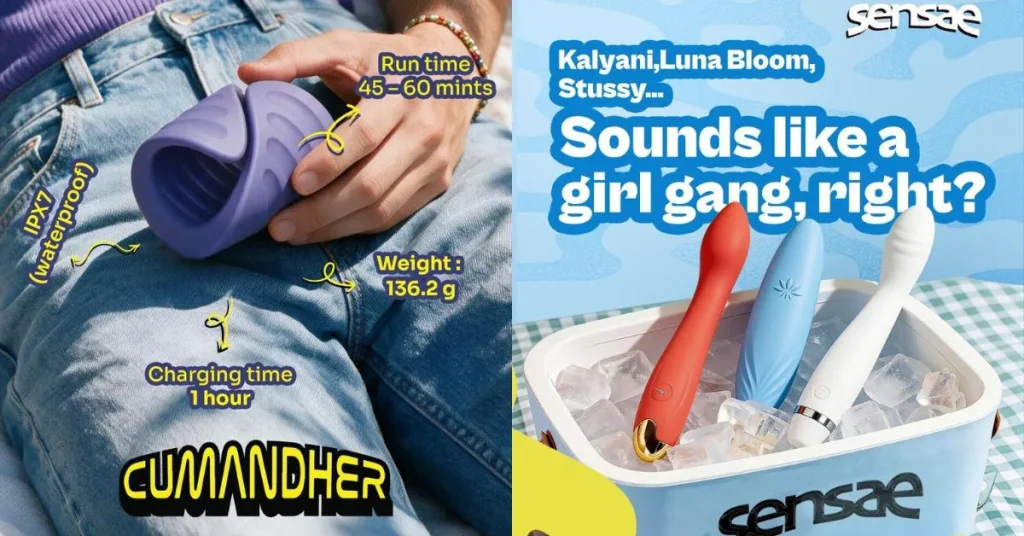
Sensae offers discreet delivery, with neither the product name nor its identity displayed on the package. The founder says customers frequently reach out to clarify how their orders will arrive. “We give a lot of importance to privacy. Our product name and brand details will not be there on the package. That is how we define discreet delivery,” he explains.
While the brand recognises the need for discretion, the larger ambition is to eventually make such purchases less of a secret. The founder draws a parallel with the changing perception of sanitary napkins and hopes sexual wellness products will also reach a point where they can be discussed without embarrassment.
The team is working towards this through its social media content, which focuses on explaining products and encouraging conversations. The team also draws on the perspectives of medical and other experts to make these discussions more informed. “We have not formally associated with any medical team. However, for discussions and events like these, we invite gynaecologists, psychologists, intimacy curators and other experts. It is more of an analysis and discussion phase for us,” Arun adds.
Also Read: 5 Sex Educators from India you Must Follow on Instagram
What are Kerala’s customers telling them?
Perhaps one of the more interesting aspects of the brand’s journey has been its response in Kerala. Despite the social conservatism often associated with certain parts of the state, the founders say they have received encouraging orders from districts including Malappuram, Kochi and Ernakulam. “Kerala has been an important market for us. While we are focusing on building the brand across India, our community and social initiatives are more focused on Kerala. Earlier, Kochi was at the top. Now, Malappuram ranks first, followed by Kochi and Ernakulam. We are getting good responses from conservative places,” the co-founder says.
The response has challenged some of the assumptions the team had about its audience. According to the founder, educational videos often generate better conversions than conventional marketing campaigns to break the taboo. People are interested in understanding what the products do and how they can complement intimacy.
One misconception that Sensae wants to address is that using pleasure products could diminish a partner’s role in a relationship. “It is an addition. Everyone needs intimacy in life. Couples also need to explore different things,” he says, pointing to enquiries from customers based in Gulf countries, including Dubai and Saudi Arabia, as evidence that interest in sexual wellness is not limited to a particular geography or social setting.
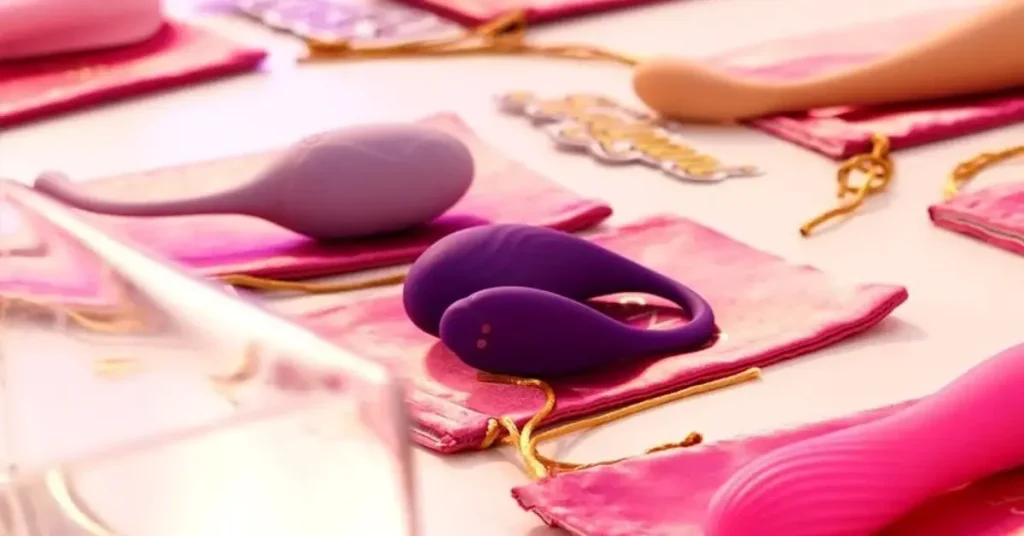
Although Sensae Social, the online platform, is positioning itself as a pan-Indian brand, Kerala remains an important market for its community-building initiatives. Its Malayalam content helps it connect with regional audiences, while orders also come from states such as Karnataka and Rajasthan. “In our content, we try to push boundaries. We do not censor everything. We try to say as much as possible and are also planning to onboard retail outlets. Basically, to break the taboo and make people comfortable, step by step.” Currently, the team is planning to open an exclusive intimacy store in Kerala, particularly looking at Kochi, to educate people slowly and make them comfortable with these products. The idea is to create another space where customers can explore products and seek information without feeling judged.
They are also keen to take awareness initiatives into colleges and other public spaces. The founder says the team has received approaches from educational institutions for sponsorships and sees these opportunities as a way to encourage informed conversations among young adults.
For a brand operating in a category where even asking a question can sometimes feel uncomfortable, changing perceptions is unlikely to happen overnight. There is a need for conversations that go beyond product promotions, address misconceptions and help people understand sexual wellness as part of their overall well-being.
When asked what the brand hopes to achieve over the next five years, the founder does not begin with sales targets or expansion figures or in a rush to battle their competitive brands. “There is, of course, a big market, and there are opportunities for more sexual wellness products and brands to enter it. That is exactly what we need. We are building a parallel platform. It is a community. And our goal is three things. Awareness, awareness, awareness. We are doing more awareness campaigns than sales campaigns,” he concludes.
We have spent years learning to speak more openly about periods, menstrual hygiene and reproductive health. The next conversation may well be about pleasure and making sure that people do not have to whisper to be part of it.
Also Read: Who Was Dr Mahinder Watsa aka The Sexpert?