
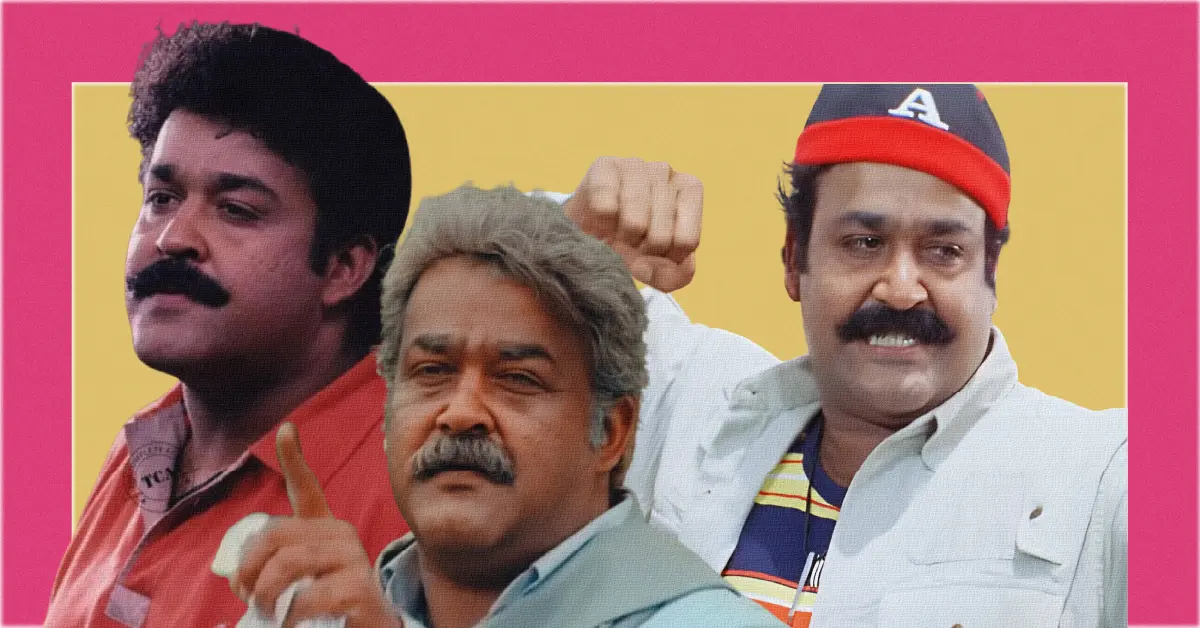
Last month, I went to watch Mohanlal’s highly celebrated film Ravanaprabhu at Kavitha Theatre, Kochi. Though I am someone who enjoys watching films in packed theatres, there were certain moments that made me feel disturbed. To my surprise, I found the audience cheering for problematic scenes in Ravanaprabhu. It made me think how regressive certain attitudes in our society are.
The director and writer of the film, Ranjith, has stated in multiple interviews that “Cinema doesn’t influence people.”
But it’s not true, because there is something called Social Learning.
The term was introduced by the famous Canadian-American psychologist Albert Bandura. He states that people learn new behaviours, attitudes, and emotional reactions by observing, imitating, and modelling others, even without direct reinforcement. He proved this experimentally using the Bobo Doll Experiment in the 1960s.
As per this theory, people don’t just imitate other humans, but also fictional characters. This means that we imitate not just our parents or friends, but also the characters that we have read about or even seen through films and other media.
One example of this is the imitation of Korean-style dressing. This happened as a result of exposure to Korean shows, music, and films.
Of course, cinema doesn’t exist in isolation. It reflects society’s attitudes too. But when these reflections are celebrated uncritically, they start reinforcing what already needs questioning.
Also read: Will Masala Films Survive the Content Revolution?
This imitation can happen for good as well as bad behaviours. For example, we adopt many Western practices while communicating with others and also provide others with their personal freedom. But it can also be negative when people are exposed to aggressive content, as this happens without much awareness.
And that’s the main reason why I find many dialogues and scenes in Ravanaprabhu problematic.
For example, there’s a scene where Mohanlal’s character calls Vijayaraghavan’s character “Aliyo”, which technically means one’s sister’s husband. To this, Vijayaraghavan’s character asks, “When did I become Aliyan to you?” The reply that Karthikeyan gives is very disturbing. He says that since he doesn’t have a sister, he shall consider a sex worker as his own sister and marry her to him. When this dialogue was said, I heard people cheering and clapping for it.
That’s when it hit me: many viewers don’t realise the weight of what they’re clapping for. Not because they’re unaware, but because such lines have been normalised over decades of similar portrayals. Because the dialogue spoken in that scene defames the other character and also indicates that sex workers are people to be ashamed of.
But my question is, why doesn’t it apply to the men who go to sex workers? Just a few minutes before Vijayaraghavan’s entry, Karthikeyan makes fun of Saikumar’s character for visiting Russian girls, indicating that he is a regular visitor to sex workers.
So why does Karthikeyan find a sex worker shameful, but his friend, who actively seeks the services of sex workers, as funny and decent?
Yes, writers should have creative freedom. But when the same tropes repeat across decades, audiences unconsciously absorb them, not out of malice but through cultural conditioning. They cheer and quote, and over time, these narratives become part of what we accept as “normal.”
You might also like: Portrayal of Sex Workers in Malayalam Movies
In another scene, the heroine Janaki develops feelings for Karthikeyan, who is an impatient and problematic person. She might have developed feelings for him during her childhood days. But after she matured and became an empathetic and compassionate doctor, why would she go behind such a character?
This will make the audience unconsciously imitate the behaviours of Karthikeyan, thinking that women prefer such men. But that’s not reality.
This is why we see many people, even in our society, trying to impress women in cinematic styles, thinking that it will earn their love. But in most cases, they fail, and they seek revenge, which is also what many films portray.
This is why I believe filmmakers must take responsibility for what they show. If Karthikeyan was a villainous character, then it would’ve given the audience the impression that he was a bad character and hence, shouldn’t be imitated. But if he’s a hero, they adopt the character’s behaviour.
This happens because people tend to imitate models who are similar to their gender or age.
What we need to understand is that these are just two examples. The film also romanticises kidnapping, shows violence as acceptable, and uses anger as a manly behaviour to show dominance over others. These things are not limited to Ravanaprabhu. The situation is no different in other films of that time, especially Narasimham, Aaram Thampuran, Spadikam, etc.
It’s also worth remembering that these films were products of their time, the early 2000s, when hypermasculinity and vengeance were celebrated cultural motifs. Understanding that context helps us view Ravanaprabhu in perspective. But what’s worrying is that, even two decades later, audiences are still cheering for the same problematic ideas – as if nothing has changed.
To be clear, no one’s asking directors to sanitise their stories. This isn’t about censorship; it’s about context. If such traits are part of a villain’s arc or shown with moral consequence, it’s contextually justified. Otherwise, they risk reinforcing dangerous ideas.
Even a simple disclaimer or public acknowledgement from creators that certain behaviours are problematic could make a huge difference.
After all, films don’t just reflect society. They shape it.
Maybe the real question isn’t whether cinema reflects society or shapes it, but whether we’re still clapping for the right things.
You might also like: Women in Padmarajan’s Films – Real and Revolutionary