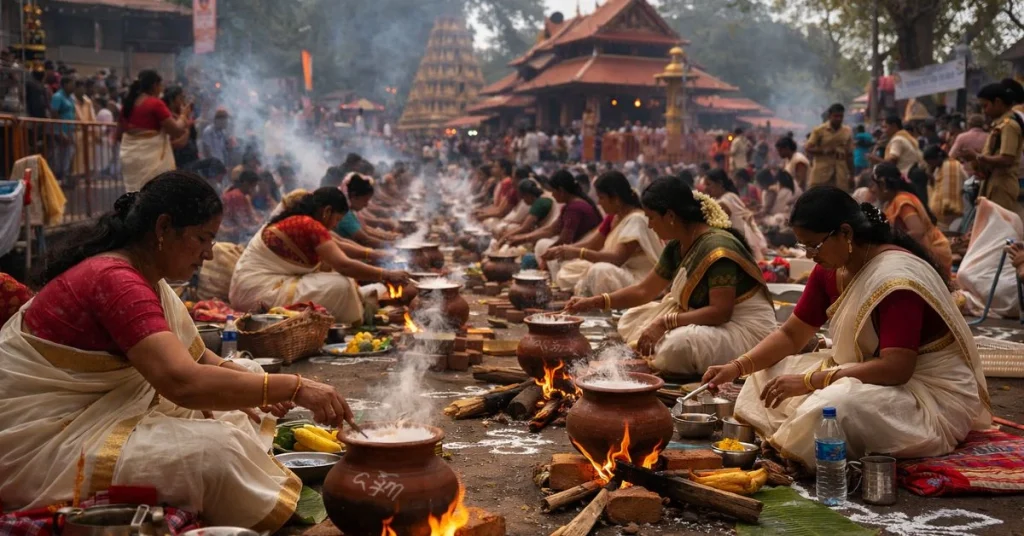
Once a year, Thiruvananthapuram stops being a capital city. It becomes a sacred ground where rows and rows of women sit before clay pots, waiting for the fire to rise. This is Attukal Pongala, held at the Attukal Bhagavathy Temple grounds, often described as the largest annual gathering of women in the world. But that statistic is the least interesting thing about it.
Behind this scared city-wide ritual lies the story of a woman who burned a city. Her name was Kannagi. And without her, there would be no Attukal Pongala.
The Myth Behind the Flame
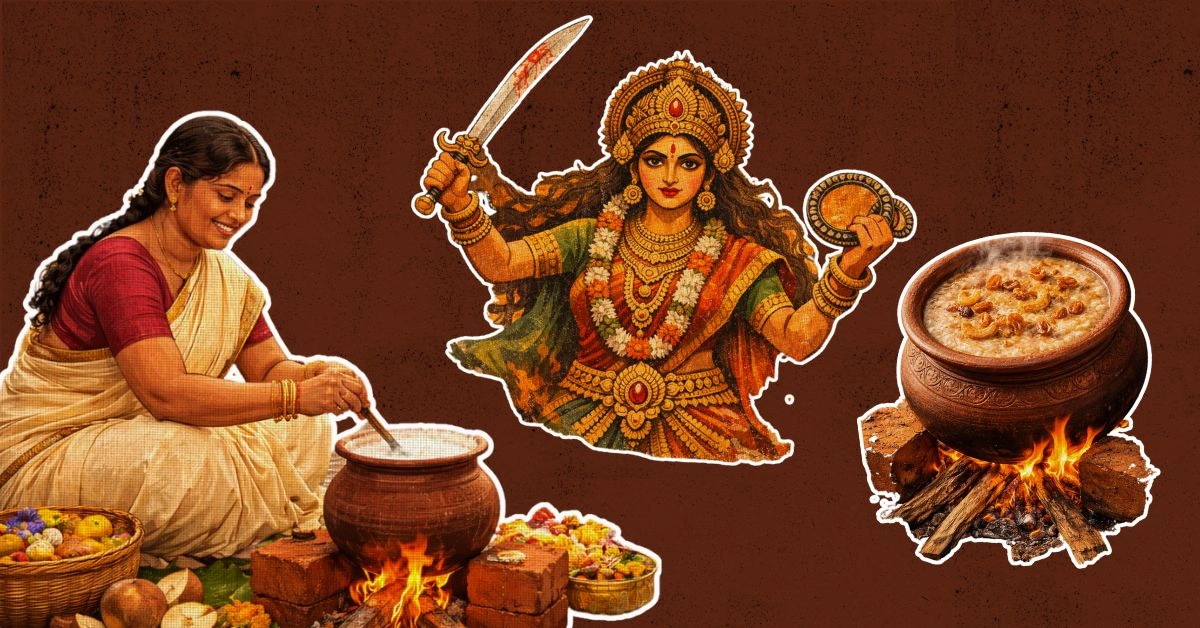
The presiding deity at the Attukal Bhagavathy Temple, Attukal Amma (Goddess Attukal Bhagavathy), is believed to be an incarnation of Kannagi (or Kannaki) from the Tamil epic Silappathikaram.
Kannagi was the devoted wife of the merchant Kovalan. It is said that the Pandya king accused Kovalan of stealing the queen’s anklet and ordered his execution without properly investigating the case. Kannagi went to the royal court and proved her husband’s innocence by showing that the queen’s anklet contained pearls, while hers contained rubies. When the king realised his mistake, it was too late. Enraged by the injustice, Kannagi cursed the city of Madurai. According to legend, she tore off her left breast and hurled it at the city, setting it ablaze. The fire destroyed Madurai but spared the innocent. When the Pandya king Nedunjeliyan I and his queen understood the gravity of their error, they died in shame.
Through this act, Kannagi came to represent feminine power. Over time, people began to worship her as a goddess.
Also Read: Mangaladevi Temple Festival: A Spiritual Journey in Idukki’s Periyar Tiger Reserve
What Happens During Attukal Pongala
Temple lore at Attukal says that after burning Madurai, Kannagi travelled westward and reached what is now Thiruvananthapuram. Local women welcomed her and offered her food made of rice, jaggery and coconut. That offering, devotees believe, became the origin of Attukal Pongala.
The word Pongala translates to “to boil over.” Women come with their earthen pots and gather across temple grounds in Thiruvananthapuram, with the streets spanning about 7 km. This transforms the area into a massive open-air kitchen. The ritual begins when the chief priest lights the main hearth at the temple. The sacred flame is then passed from one hearth to another, symbolically connecting all participants.
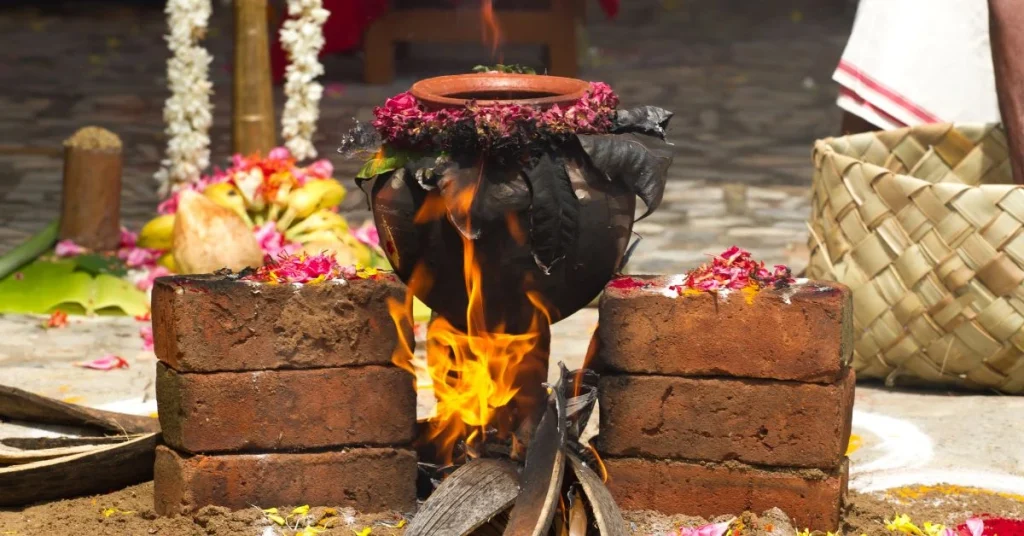
The women then cook a sweet offering, which is usually a mixture of rice, jaggery, and coconut. In Kerala, we call it payasam, a dish traditionally prepared during special occasions. When the mixture bubbles over, it symbolises prosperity and fulfilment of prayers.
In 2009, Attukal Pongala entered the Guinness World Records for the largest gathering of women for a religious activity. But even without record numbers, the visual impact is amazing to see. Despite the scale, the atmosphere is often described as calm. You can witness women sharing ingredients, helping each other light fires, and waiting patiently for the ritual to conclude.
You might like: