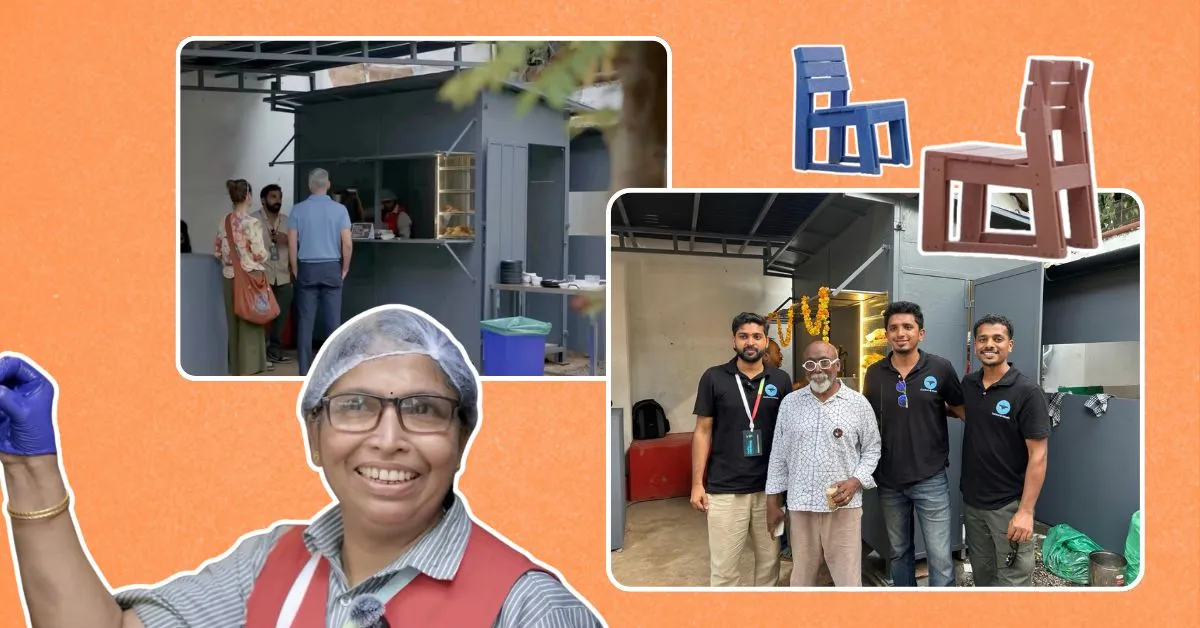
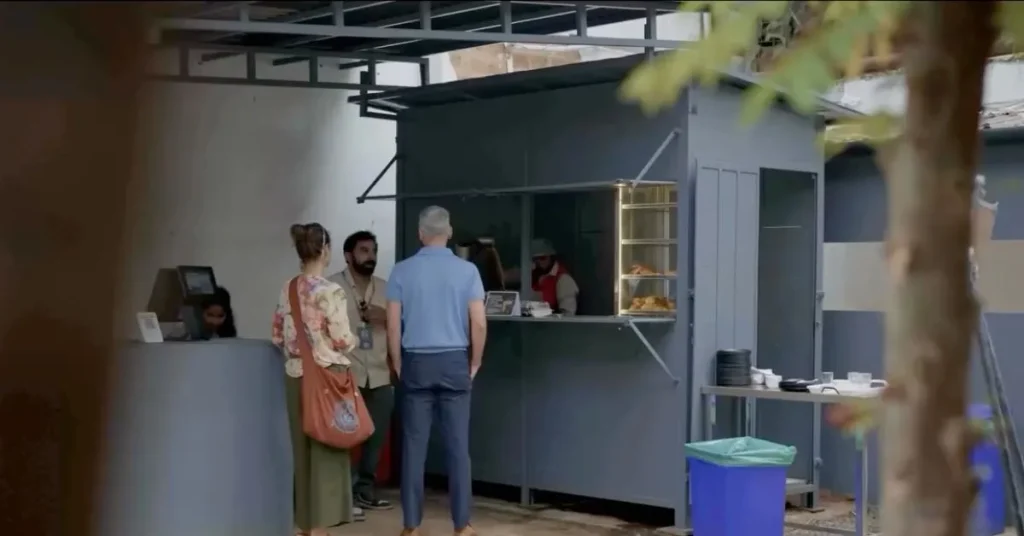
At the Kochi Biennale this year, Carbon & Whale transformed 645 kilograms of discarded plastic into an employment opportunity. Inside Aspinwall House stands a small pettikada built by Carbon & Whale, a sustainability-focused venture known for their modular benches made using plastic waste. For the Biennale, they turned plastic waste into a functioning tea and snack stall run by Kudumbashree women.
Designed as a pilot project for the Kochi Biennale, Carbon & Whale’s sustainability initiative shows how recycled plastic can be turned into real, usable infrastructure.
Alvin, one of the founders of Carbon & Whale, wanted to address two issues at once: the growing problem of plastic waste and the lack of affordable opportunities for women who are licensed but unable to set up food stalls on their own. He approached artist and Biennale founder Bose Krishnamachari, who has long been involved in sustainability-driven initiatives, with an interesting proposal. Could waste be turned into infrastructure, and could that infrastructure create livelihoods?
The result was the traditional pettikada but made using recycled plastic waste.
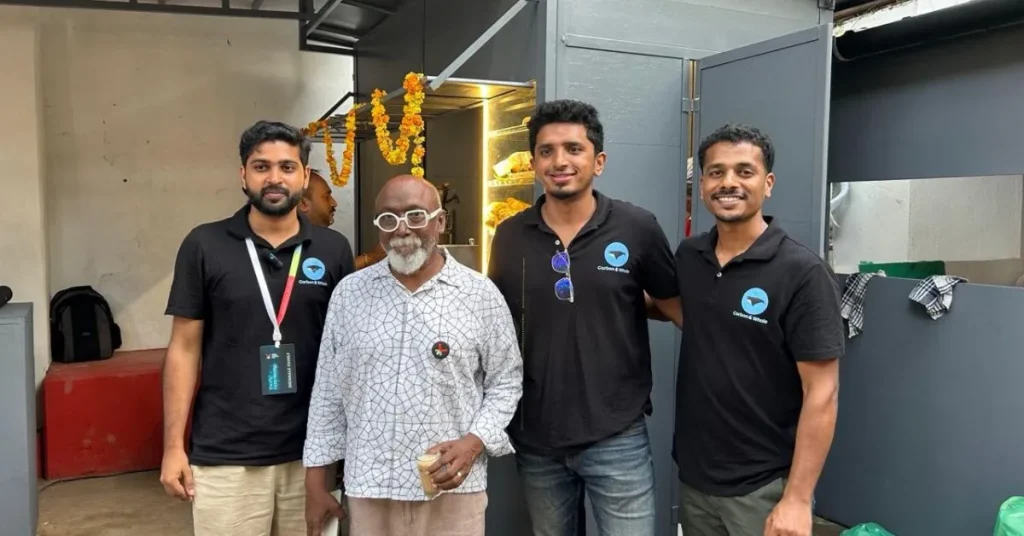
Carbon & Whale designed and built the stall entirely from recycled plastic waste and offered it as a complimentary installation to the Kochi Biennale. The kiosk was handed over to Kudumbashree members who sell tea, coffee, and snacks to visitors throughout the Biennale season.
Many Kudumbashree women hold certificates from the corporation that allow them to run food businesses. What they often lack is the money and access needed to build a stall and secure a visible location. This project removed that barrier by providing a ready-made space in one of Kochi’s busiest cultural venues, Aspinwall House.
Alvin explains, “Not only does this solve the problem of plastic waste management, but it also shows how waste can be used to solve real problems, especially when it comes to women and employment.” The project brought together sustainability and social impact. It recycled plastic that would otherwise end up in landfills, created temporary employment for underprivileged women, and demonstrated how circular design can work in real-world settings.
The response from Kudumbashree has been positive. Initial conversations suggest a strong interest in expanding this model, especially since thousands of women across Kerala have licenses but no infrastructure to operate from.
Carbon & Whale’s pettikada project is only a starting point. With this installation at the Kochi Biennale, Carbon & Whale has shown that sustainability can be practical. In doing so, it offers the possibility that sustainability works best when it creates opportunities, not just awareness.