

The year is 1959, and there is widespread agitation in Kerala — the Vimochana Samaram. There’s widespread protest and agitation against the EMS-led Communist government. And 14000 kilometres away, this agitation is being monitored by the CIA.
But why is the US so interested in a tiny state in a 3rd world country? For that, we’ll have to rewind the clock a little bit…to 1957.
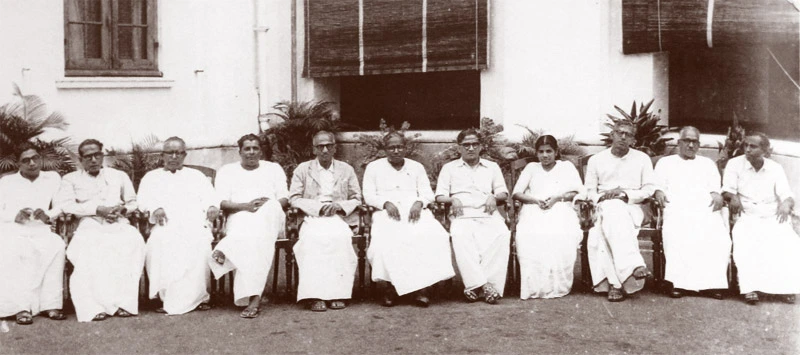
In an almost unprecedented event in history, a Communist government was elected into power democratically. And this happens in our very own Kerala.
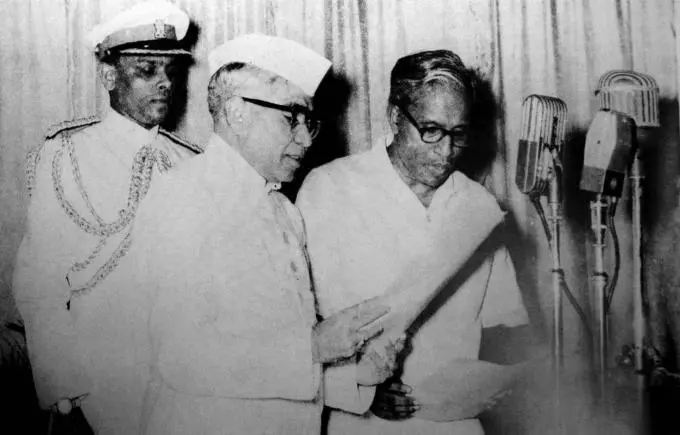
| Sidenote: “Almost unprecedented” because the first time this happened was in the Republic of San Marino in 1945. But San Marino is a small country, with just an area of 61.2 sq km and a population of thirty thousand people. |
So yeah, in 1957, when a Communist government was voted into power, Kerala became one of the focuses of global attention. The “Kerala” experiment is born!
You might also like: What is the Punnapra Vayalar Uprising all about?
If you’re wondering what all this fuss is about, let me remind you that in 1957, the world was in the middle of the Cold War. The globe was divided into 3 — the Western bloc (which was pro-Capitalism), the Soviet bloc (which was pro-Communism), and the non-aligned nations (which refused to take sides). India was part of this non-aligned bloc. Now, this is why the “Kerala” experiment is of specific interest to all sides. Because, so far, apart from San Marino, Communism has come into power largely through violent or coercive means. So if the Communist Government in Kerala succeeded, it gave rise to a model that other states and nations could follow.
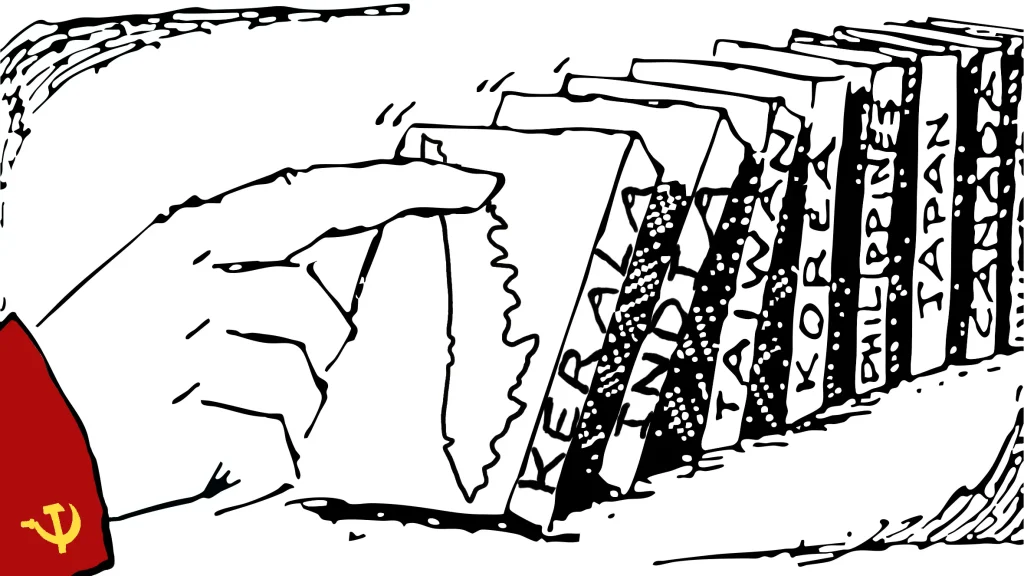
CIA intelligence assessments considered whether a Communist government in Kerala could have a demonstration effect elsewhere in India. They also feared the “Communist virus” spreading to other Asian nations once it spread in India. The US Secretary of State, John Foster Dulles, said at a press conference in September 1957, “Local election victories by Communists in India and Indonesia are a dangerous trend. It is a dangerous trend whenever Communists move towards political control.”
So that brings us to the crux of the matter. Did the CIA lead to the toppling of the first Communist Government in Kerala?
Talk of this “act of espionage” started when an American ambassador to India, Daniel Patrick Moynihan, in his memoir A Dangerous Place, said that the CIA gave money to the Congress leadership on two occasions to fight the Communists — the first time for Kerala during the first Communist ministry and a second time in the 1960s for West Bengal.
You might also like: Kunjali Marakkar: The Real Story You Should Know About
For years, the main public evidence for direct CIA funding against the Kerala Communist government came from Moynihan’s memoir. More recently, declassified US documents, Ellsworth Bunker’s oral history and studies of Eisenhower‑era records have corroborated that Washington authorised covert assistance to Congress in Kerala. Congress leaders still deny this, and some CIA files remain redacted, but the archival trail is much stronger than it once was.
The US might not have had Jason Bourne running around the streets of Kerala, but it did have extensive intelligence collection. The US seems to have believed “that the removal of the communists from power in Kerala is related to the problem of combating communism in India as a whole.” The Embassy dispatch to the Department of State talks about how the Embassy will seize every opportunity to suggest specific measures that serve the purpose of denying aid and comfort to the communists in general and in Kerala in particular. And how Keralites would see aid flowing into the neighbouring states and realise how Communism isn’t working for them. They talk about how they plan to coordinate with GoI officials to tackle Hungarian investment plans in Kerala.
It is this “soft power” that the US seems to have used to achieve its end. The documents talk of how the Communist government shot itself in the foot with policies that led to widespread agitations. As you might know, two of these reforms were widely talked about – the land reform and the educational institution reform. The educational institution reform, in particular, attracted a lot of dispute and led to the eventual downfall of the government.
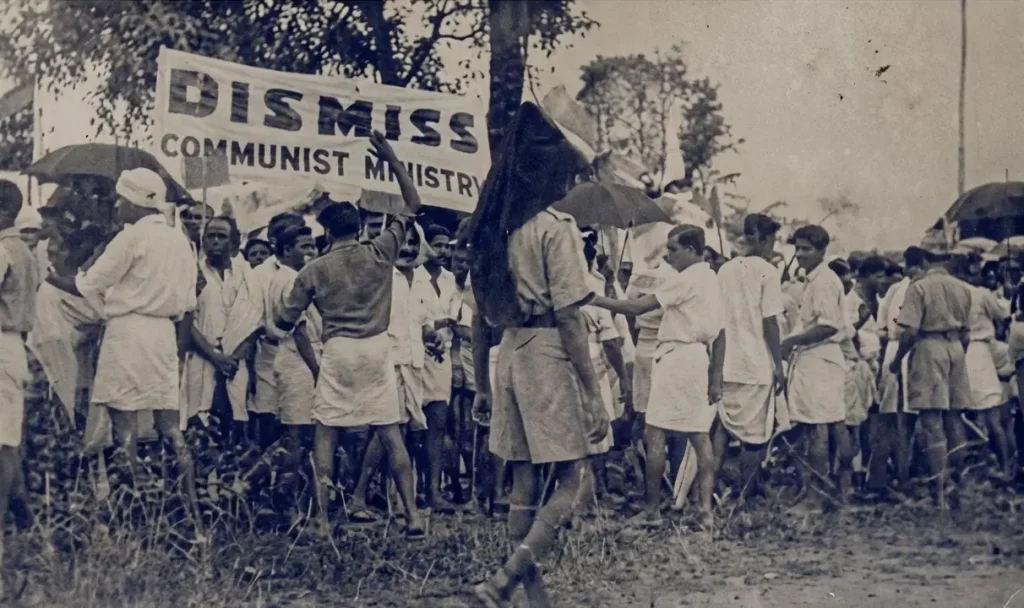
But in this discussion about the US and the CIA, we should not forget about the Congress Party. I daresay that they had more skin in the game than the Americans did, for if the Communist government was successful in Kerala, they might have lost their preeminence in the Indian political system. A CIA bulletin talks of how the Indian Central Intelligence Bureau was supposed to supply funds to a Nair leader to get Communist members of the Nair community to defect.
What’s more interesting is that some recently declassified British intelligence files and subsequent historical analyses suggest that the MI5, MI6, along with the CIA, supported anti-Communist training initiatives within Indian trade unions, reportedly with the knowledge of senior Indian officials. These trained operatives were then infiltrated into the Indian Trade Union Congress, where they would counter CPI-aligned unions. This complemented the CIA’s funding efforts.
So, in light of all this, it appears that the Union government and foreign agencies aligned their interests to exploit a political crisis to bring down the first Communist Government in Kerala.
But hey, we still have an elected Communist government in power, right? Why did these foreign agencies stop their intervention? Well, I found the answer to that in another CIA document that talked about how Indian Communists are not a threat to US national interest anymore, as they are more focused on electoral politics.
You might also like: Kerala’s Drinking Problem: A Dive Into Its History
As for me, I am happy that some of the CIA’s predictions about how “economic development, unemployment and underemployment, insufficient food, and communalism” will remain problems for Kerala are slowly getting tackled, and we’re moving towards showing how the ‘Kerala experiment’ can be successful.