Although I watched Dorothy way before Instagram was overflowing with spoilers and director-brilliance reels, the truth is, it really took me 2-3 business days to fully process the film and write about it. Because some films make you sit in the theatre as the credits roll, baffled by the emotions they have left you with, emotions you had no idea you would carry back home. Dorothy was one of those films for me.
| Spoiler alert: This piece discusses major plot points, including the ending, and references violence. If you haven’t watched Dorothy yet, bookmark this and come back. |
To me, Dorothy is a confrontation with society, and with each one of us. The film has stirred things up and sparked debate, with many saying it made them uncomfortable. Of course it will, and I think it should. But the question is: What exactly about it makes you uncomfortable?
The film, set in the 90s, depicts a section of society where male chauvinism, misogyny, patriarchy and casteism suppress vulnerability, tenderness and ultimately, our basic humanity. If what makes you uncomfortable is the violence, misogyny, casteism, and suppression of vulnerability that the film puts before you, perhaps that discomfort comes from recognising something very human: the pain of watching another person denied the right to merely exist as themselves.
But if it is the love that comes without terms and conditions of society that makes you uncomfortable, then the film brings a different question to you. Why are you uncomfortable?
That, for me, is the confrontation Dorothy brings to light.
Also Read: The Evolution of Malayalam Queer Literature
Entering the world of Dorothy
The world-building in Dorothy is beautiful and deeply layered. On the surface, you could reduce the film to a one-liner — a human being falling in love with another human being. But the film goes far beyond that. It doesn’t randomly touch upon sensitive subjects one after another and become preachy about them. There are multiple themes at play, but the film knows exactly which notes to hit.
Be it any industry, we have seen countless films about friends falling in love. Malayalam and Tamil cinema both have a long history of audiences accepting stories where two friends eventually fall for each other.
But here, when a man falls in love with his friend who is a trans woman, do you see it differently? Or, more importantly, why do you see it differently?
Looking inward, holding a mirror
They say we are what we nurture ourselves in. And yes, to a point, we are products of our surroundings, until we choose otherwise.
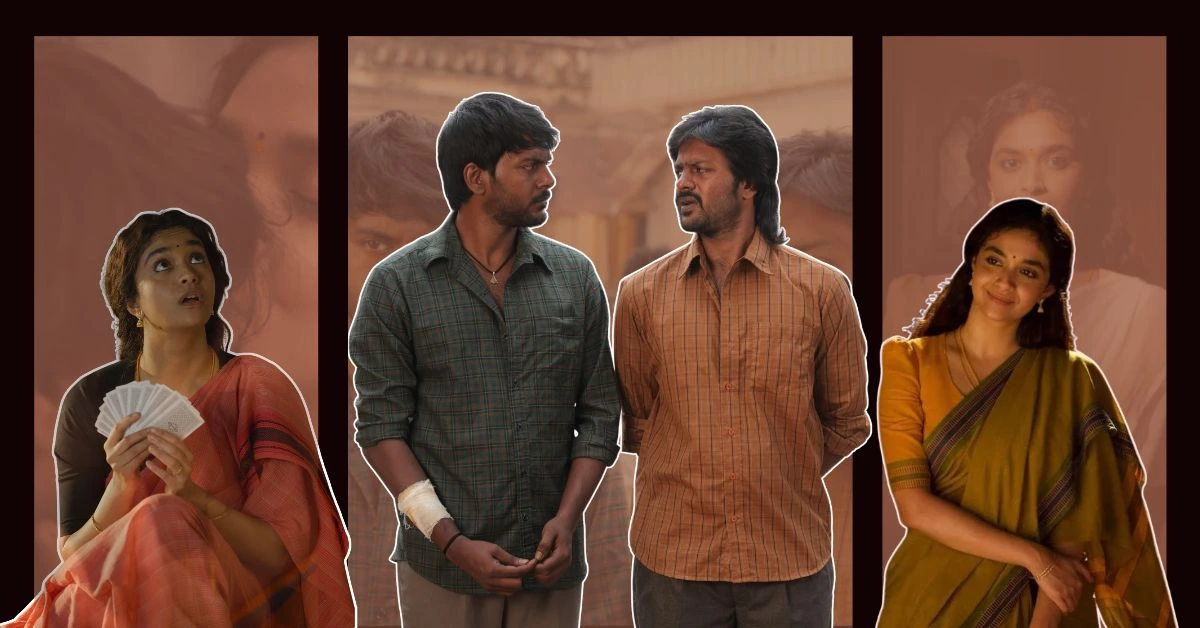
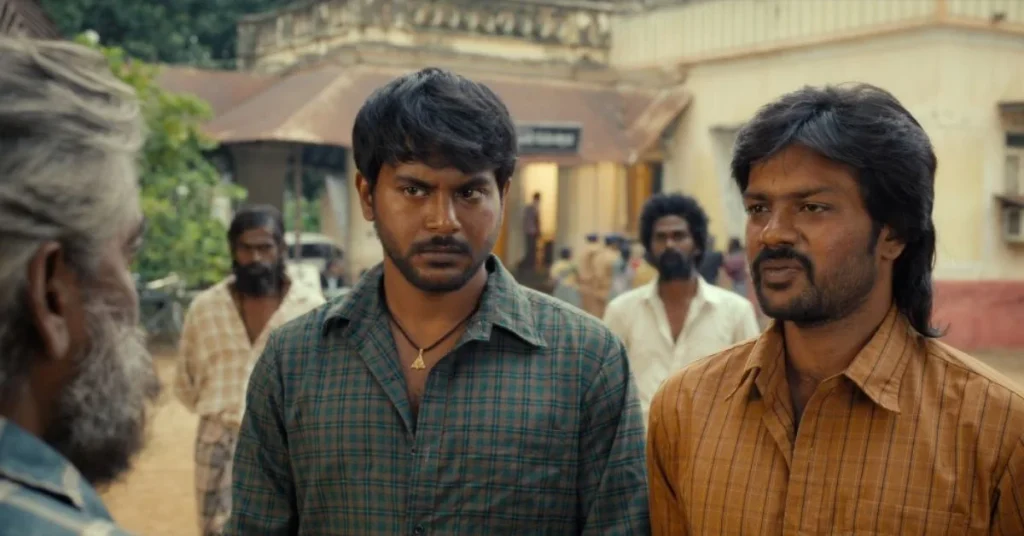
Look at the lead characters, Karthi (Rishikanth) and Subbu (Sananth). Even their names feel significant, almost like an extension or a wordplay of the filmmaker Karthik Subbaraj’s name. In a way, I feel they are an extension of the audience too. The film holds a mirror to us through these characters, as if we carry parts of both of them within ourselves.
They are reflections of the societies and environments we grow up in.
Looking at the characters at different points in their lives, we see the irony and the difference. Look at their childhoods. Karthi is soft, empathetic, and extremely sensitive. Subbu, meanwhile, grows up in a patriarchal, male-chauvinistic household without any women or feminine energy and initially tries to imitate the men around her.

And isn’t that what we all do as children? We imitate our environment. We imitate our families. We absorb what we see. That is what these children are doing.
But as they grow up, they begin to become people of their own. They start unlearning and learning. And eventually, they become almost the opposite of who they were as children.
Karthi, who is constantly shunned by Subbu’s family because of caste, somehow tries to become a part of the very chauvinistic masculinity that once excluded him. Subbu, on the other hand, eventually begins to understand that she does not want to be a byproduct of the people who raised her.
The same Subbu who constantly tells Karthi, “Men don’t cry”, eventually breaks down on Karthi’s mother’s lap once she tastes an ounce of tenderness and warmth, as she remembers the women in her life who died as a result of the very social norms that refuse to allow femininity and vulnerability to exist.

As Subbu grows, she begins to understand that she wants to be a human being first.
And the film keeps playing with these contradictions. The restaurant owner who once gave free food to the children and caressed them, asking, “Why do I need money for love?”, becomes the very same double-edged figure who casually asks for Subbu to be killed, refusing to accept her individuality.
Meanwhile, the rowdy Subbu, initially considered a mentor, eventually becomes someone who asks Karthi the question that makes him think twice: Who gave us permission to take a life? That is where Dorothy becomes much bigger than its central love story.
When vulnerability becomes strength
Throughout the film, I found myself feeling safer whenever a woman or a trans/queer person entered the frame than when men did. There was an immediate sense of discomfort whenever Karthik Subbaraj turned the camera towards the darker side of society through the men in Subbu’s house.
Right from the beginning, we see how unsafe women feel around Whistle Ayya, Subbu’s father. The film doesn’t have to repeatedly tell us that this is an unsafe world for women. It makes us feel it.
And that feeling becomes even more interesting when we look at the relationships that give Subbu a sense of safety.
When Subbu discovers that Dorothy is dead, we see and feel the devastation through Subbu. For once, unlike many films, the director chooses not to show us exactly what happened to Dorothy or depict the violence she went through.
We just know she has been violated. But the story doesn’t take us through the details. Here, for once, it is said better than it is shown.
The absence of that spectacle makes the grief feel more personal. We experience the loss through Subbu rather than through the violence inflicted on Dorothy.

The beauty of platonic love
The film introduces Keerthy Suresh as Dorothy, a Malayali woman who enters an already toxic family via marriage and, somehow, chooses to live a life of her own.
Dorothy eventually becomes Subbu’s confidante, safe space, and secret keeper — things we usually look for in a friend.
The film doesn’t just celebrate the love between the two leads. It also shows us how important allies are in our lives, and how important platonic love can be. There is a certain warmth that these relationships give us — the kind of warmth that keeps us going.
We see that in the way Subbu feels around Dhanam, her childhood best friend, and Dorothy, the sister-in-law.
Also Check Out: How One Movie Changed My Perception Of Homosexuality
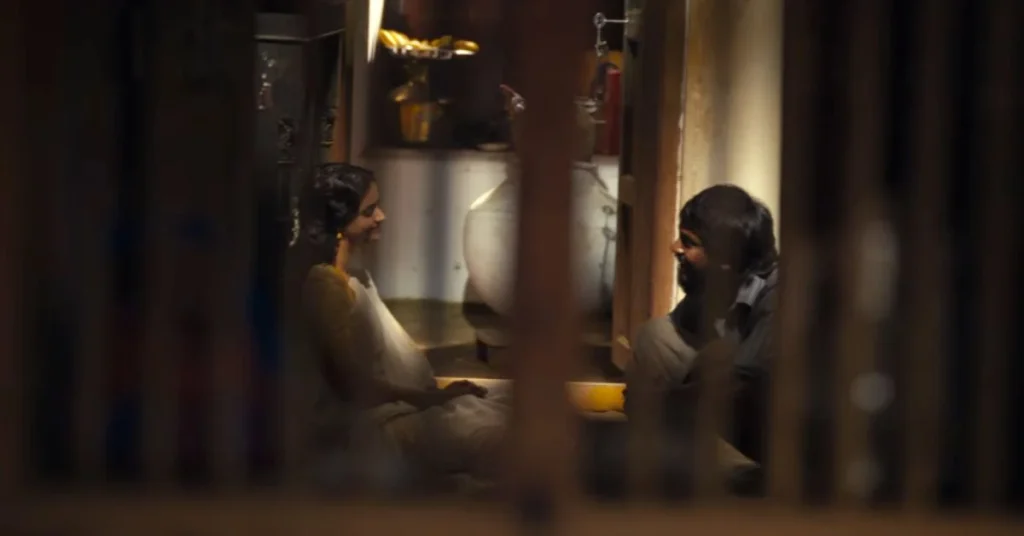
From the moment Dorothy enters Subbu’s life, there is a light in Subbu’s eyes. Eventually, Subbu finds a certain comfort in her.
Even before knowing, and even after understanding Subbu’s identity, Dorothy doesn’t withdraw. If anything, she accepts and embraces Subbu even more.
That is the beauty of these relationships. The way the women characters embrace Subbu also makes us question the idea of who is supposed to be the “weak” gender. The people society often calls weak are, in fact, the ones holding Subbu up and making her feel safe. And it isn’t just people.
Right from the beginning, we see even objects becoming characters — side characters with main-character energy.
Take the porotta from the beginning of the film. It seeds the friendship, the bond between Subbu and Karthi, and eventually travels through the film, almost becoming a character of its own.
There is also something significant about the way Subbu teaches Karthi to eat it, and the way Karthi eats it. Even eating a porotta has a particular way, a certain set of rules they believe in. And towards the end, we see Karthi breaking that way of eating as well. It subtly tells us that you don’t have to have rules and regulations for everything. The film keeps breaking these rules without announcing that it is doing so.
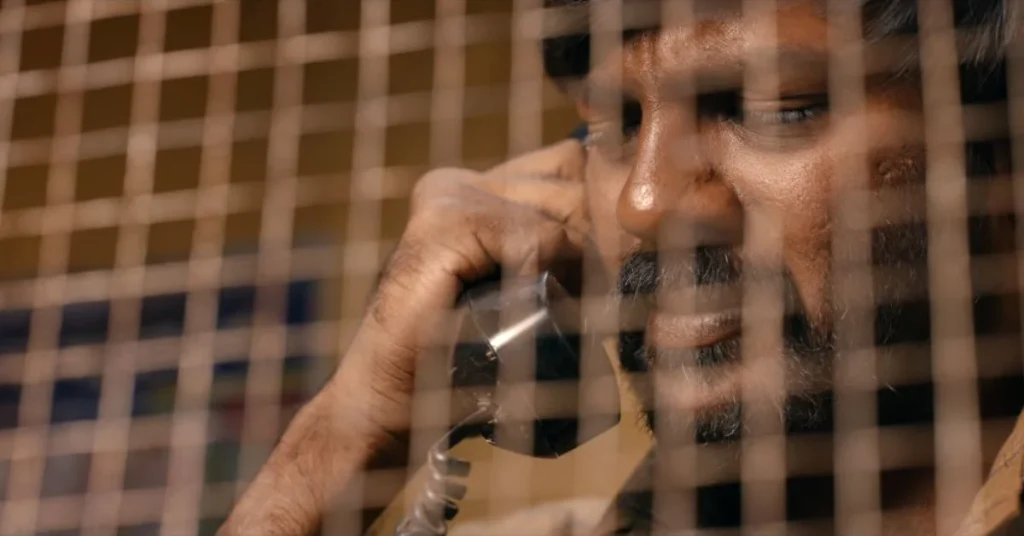
Then there is the well that takes and gives life, one of the film’s most powerful symbols.
In the first few scenes, we see an elderly woman dead near the well. Karthi, who is still a soft, empathetic child at that point, refuses to look at it. He doesn’t want to see the body.
But Subbu casually says that her mother and sister died there, along with many other women in the past. Later, Dorothy becomes the woman who enters this family and eventually dies because of the same suppression that claimed the women before her.
But that same well, which has taken so many women’s lives, is also the well that gives Subbu a kind of rebirth. It is where Subbu is reborn as the woman within her. That becomes such a powerful contradiction.
Subbu takes Dorothy to the well. A place associated with death becomes a safe space for them. It is where Subbu finds some kind of peace with Dorothy, where she can speak to her and open up. The same well that took the lives of so many women becomes the place where Subbu finds the courage to live as herself.
Even after Dorothy’s death, when Subbu embraces her identity, she returns to the same place to cry. The well remains the same. And in that well, Subbu sees everyone — her mother, her sister, Dorothy, all the women who came before her. In a strange way, the same well that took their lives becomes the only well that gives Subbu rebirth.
And that is why Dorothy’s presence becomes so significant. Dorothy shed light on Subbu’s life. She showed her something about herself that she had never been allowed to see. So Subbu wears Dorothy’s sari. She wants to become Dorothy.
Because she wants to carry forward the same light that the women in her life had shown her — the light that allowed her to finally see herself.
Love? Love.
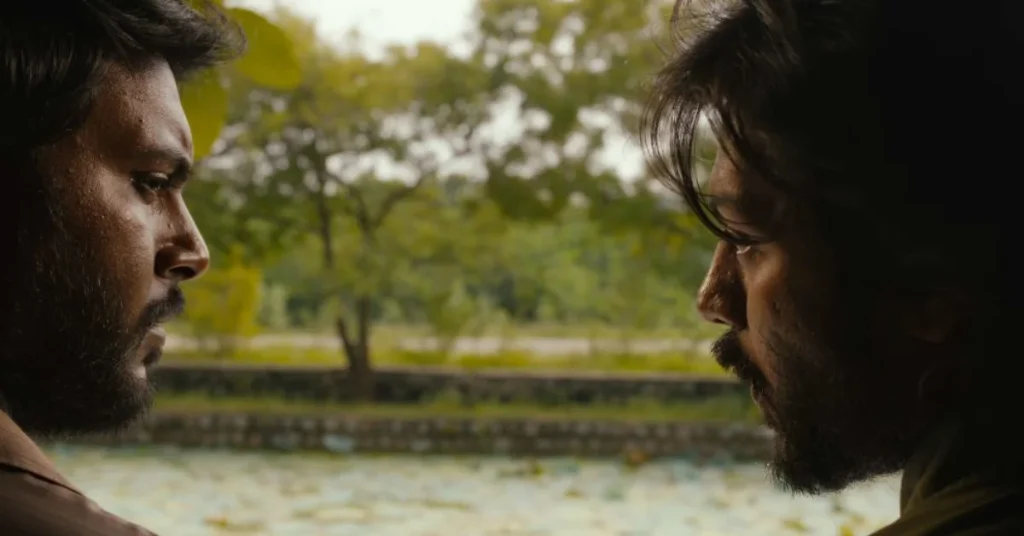
And then there is Karthi. His character may make you think — how can you fall in love with someone in such a short period of time? Especially someone like Karthi, who has an aversion to the queer community, who constantly wants to perform masculinity, who refuses to cry and refuses to process grief even when he goes through a breakup.
There is even a dialogue where Karthi says to his ex that he wouldn’t cry for some random girl. And then we see this transformation, from that person to someone capable of tenderness; from planning to kill Subbu to eventually falling in love with Subbu.
So how is that possible? But if you really ask the question, the answer is, why not? As we see Subbu having people like Dhanam and Dorothy around her, the only person Karthi really had was Subbu. There is an unexplainable bond between them that exists right from childhood. Even after Karthi meets Subbu again, now seeing her in a sari, there is that brief moment when they hug, before Karthi pushes Subbu away. But he has never really been able to let go of Subbu.
And then there is Ilaiyaraaja’s music, named ‘How to name it?’ in that scene.
Cut to Karthi confessing his love through a kiss in the climax — the same music score is renamed as ‘How else to name it?’ Simple as that, the most beautiful explanation of love.
Maybe you don’t always need a name for it. Maybe you don’t need an explanation for it. Maybe you just recognise it. And that is what Dorothy ultimately leads the audience to, I think, which is not to understand every kind of love through the rules society has handed us, but to recognise the person standing before us.
To see them before we categorise them. To feel before we judge. And to allow another human being to be human, just like how we would want to live in this world.